Perched 160 meters above the busy market town of Dambulla sits Sri Lanka's largest and best-preserved cave-temple complex. Known locally as the Rangiri Dambulla Raja Maha Vihara (Golden Rock Temple), this UNESCO World Heritage Site has served as a place of sacred worship for over twenty-two centuries.
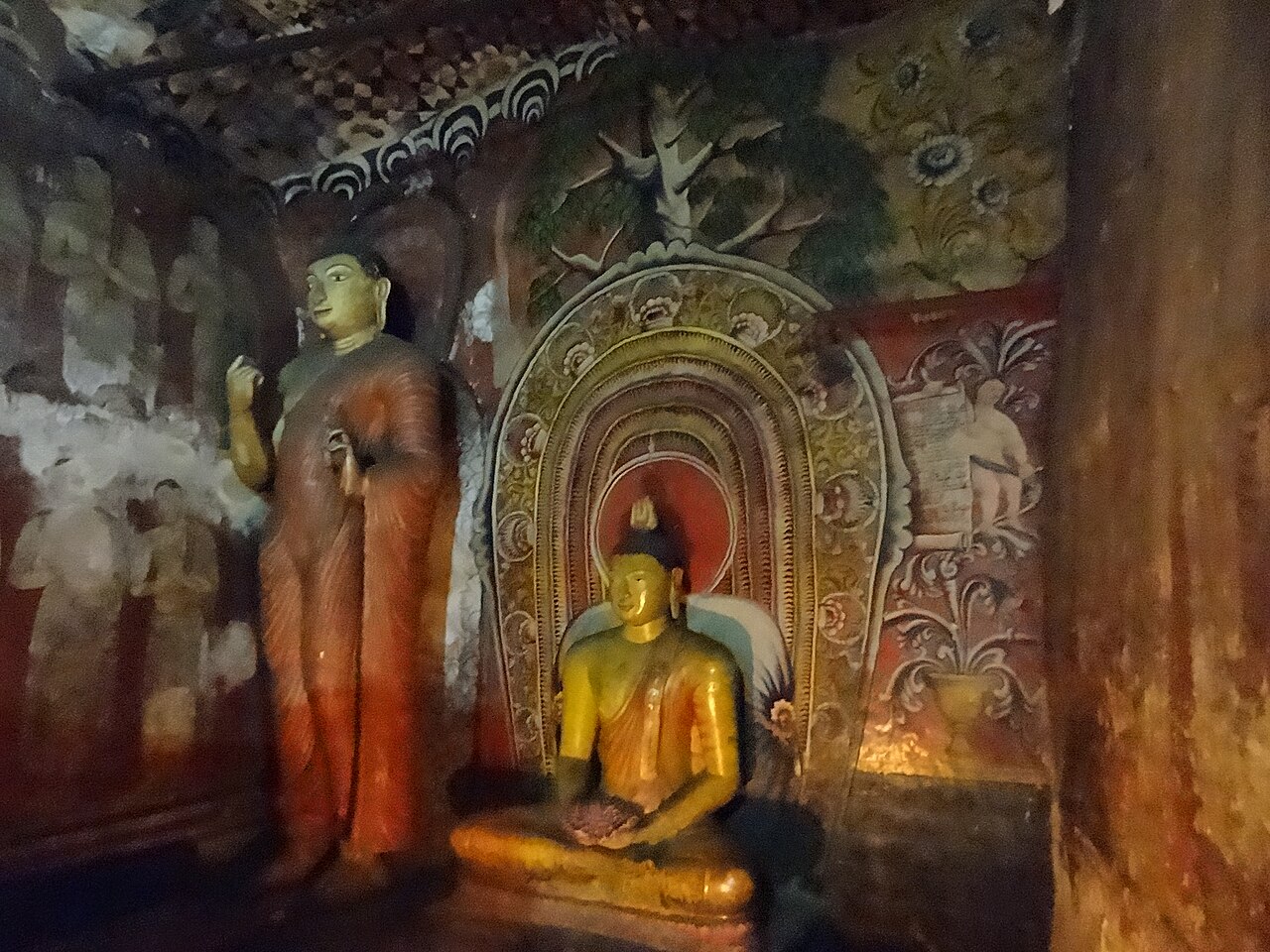
Beneath an enormous overhanging granite cliff, five individual cavern shrines shelter more than 150 Buddha statues, intricate statues of Sinhalese kings and Hindu deities, and over 2,100 square meters of painted ceiling frescoes.
1. The Historical Refuge of King Valagamba
In the 1st century BCE, King Valagamba of Anuradhapura was driven from his capital by South Indian invaders. He found sanctuary in these secluded mountain caves for 14 years. Protected by Buddhist monks, he gathered an army, reclaimed his throne, and transformed the caves into monumental shrines in gratitude. Successive monarchs, including King Nissanka Malla in the 12th century, gilded the statues and expanded the artwork.
2. Exploring the Five Caves
Each of the five caves features a distinct atmosphere and artistic character:
- Cave 1: Devaraja Lena (Cave of the Divine King): Dominated by a colossal 14-meter reclining Buddha carved directly from the living granite bedrock. At his feet stands his devoted disciple Ananda.
- Cave 2: Maharaja Lena (Cave of the Great Kings): The largest and most spectacular cavern. It contains 16 standing and 40 seated Buddha statues, shrines to Vishnu and Saman, and a sacred vessel catching water dripping upward from the ceiling that never runs dry, used in sacred rituals.
- Cave 3: Maha Alut Vihara (The Great New Temple): Commissioned in the 18th century by King Kirti Sri Rajasinha of Kandy. Features 50 Buddha statues and vibrant Kandyan-style frescoes illustrating Buddhist cosmology.
- Cave 4: Pachima Vihara (Western Temple): A smaller, intimate cave featuring a central dagoba and delicate lotus paintings.
- Cave 5: Devana Alut Vihara (Second New Temple): The newest cavern, decorated with statues made of brick and plaster.
3. Practical Advice for Visitors
- Ticket Office Location: Buy your entrance ticket at the lower counter before walking up the hill. Tickets are not sold at the top entrance.
- Shoe Counter Protocol: Shoes must be removed before entering the paved temple courtyard. The granite stone pavement can become scalding hot under midday sun—wear thick socks to protect your soles.
- Respectful Photography: You may photograph the statues and murals, but never pose with your back turned directly to a Buddha statue, as this is considered deeply disrespectful under Sri Lankan law.
“Dambulla is the ideal stop on your transfer between Sigiriya and Kandy. Take your time inside Cave 2. When your eyes adjust to the soft golden light, look closely at the ceiling: the artists used natural plant dyes and bee's honey in their pigments, which is why the colors remain so astonishingly vivid after hundreds of years.”