Jutting into the Indian Ocean on the southwestern tip of Sri Lanka, Galle Fort is an enchanting living architectural monument. Unlike colonial ruins preserved under glass, Galle Fort is a vibrant, thriving urban neighborhood where multi-generational families of Sinhalese, Tamil, and Sri Lankan Moor heritage live alongside historic churches, mosques, boutique cafes, and artisanal jewelry workshops.
Originally established by the Portuguese in 1588 following their initial landing on the island, the 36-hectare fortress was radically expanded and reinforced by the Dutch East India Company (VOC) during the 17th and 18th centuries into an impregnable maritime stronghold built of solid granite blocks and ocean coral.
1. The Bastion Walk at Golden Hour
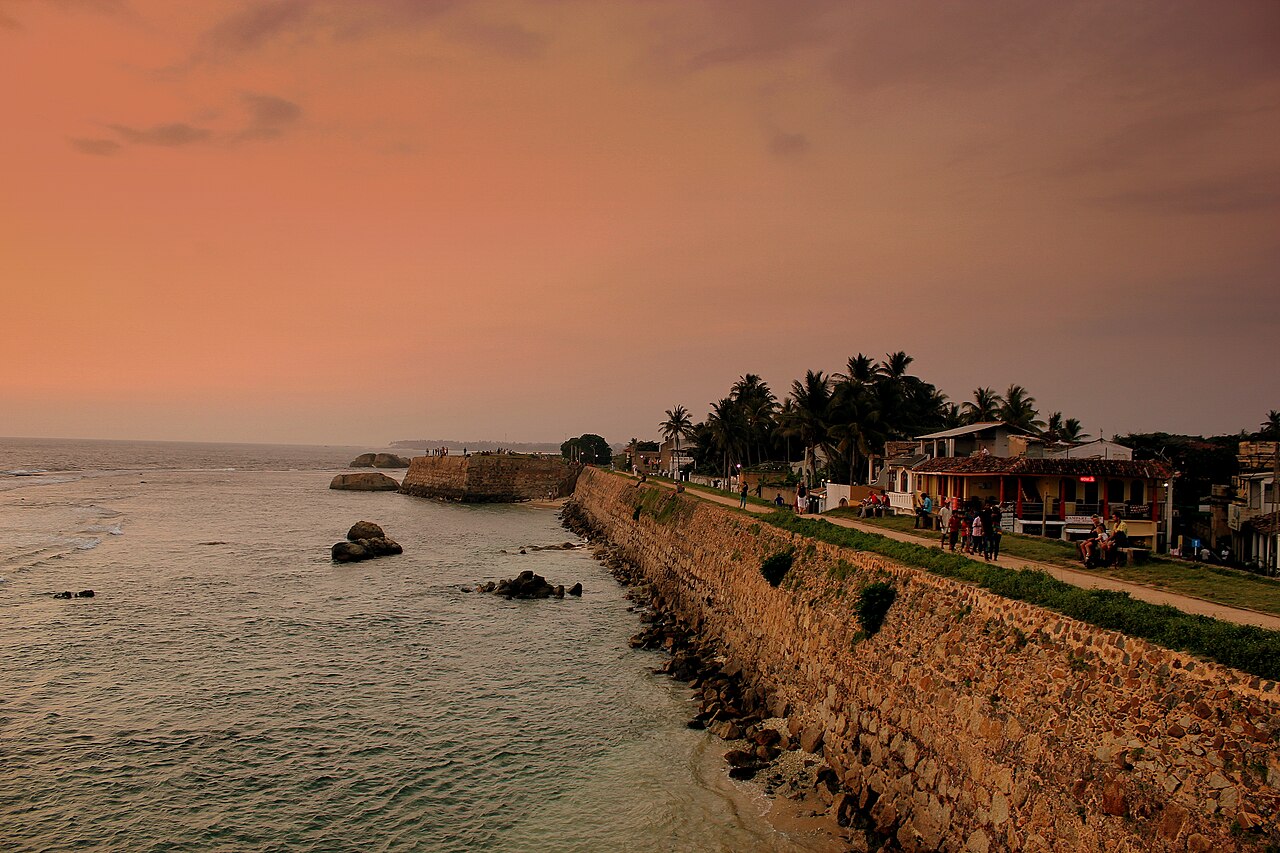
The quintessential Galle Fort ritual is walking the perimeter ramparts between 5:00 PM and 6:30 PM:
- The Lighthouse (Point Utrecht Bastion): Built in 1939 beside a graceful palm grove, the pristine white 26-meter lighthouse is the iconic photographic symbol of Galle.
- Flag Rock Bastion: Once a Portuguese signaling station where flags warned approaching merchant frigates of coral shoals. Today, local thrill-seekers dive headfirst into the ocean surges between rocks, while families gather to watch the sun sink into the sea.
- Moon, Star & Sun Bastions: The formidable northern defensive walls fronting the mainland, featuring thick ramparts, deep dry moats, and massive arched gateways engraved with the VOC crest and the year 1669.
2. Key Cultural and Historical Landmarks
- The Dutch Reformed Church (Groote Kerk, 1755): Built on the highest ground in the fort, featuring curved baroque gables, an organ loft, and a floor paved entirely with historic gravestones of Dutch governors and merchants.
- The Old Dutch Hospital: A colonnaded 17th-century medical pavilion overlooking the sea, now tastefully converted into vibrant oceanfront restaurants and shops.
- The National Maritime Museum: Located inside the cavernous VOC warehouse (1671), displaying artifacts recovered from shipwrecks in Galle harbor.
- Pedlar Street & Leyn Baan Street: Shaded cobblestone alleys lined with Dutch-period villas characterized by terracotta-tiled roofs, pillared verandas, and inner courtyards.
3. Practical Tips for Visitors
- Pedestrian Sanctuary: The narrow interior streets have minimal car traffic, making it a joy to explore on foot.
- Shopping: Galle Fort is Sri Lanka’s premier center for certified natural gemstones (especially Ceylon Blue Sapphires), handmade lace (beeralu), and organic spa products.
- Dining: Savor fresh local seafood, handmade gelato, and Sri Lankan spiced craft cocktails at chic open-air courtyard cafes.
“Galle Fort has a magical atmosphere after dark. When the day-trippers return to their beach resorts and the street lamps illuminate the cobblestones, take a quiet stroll along Church Street. You can hear the ocean waves crashing against the bastions while warm breezes blow through the colonial arches.”