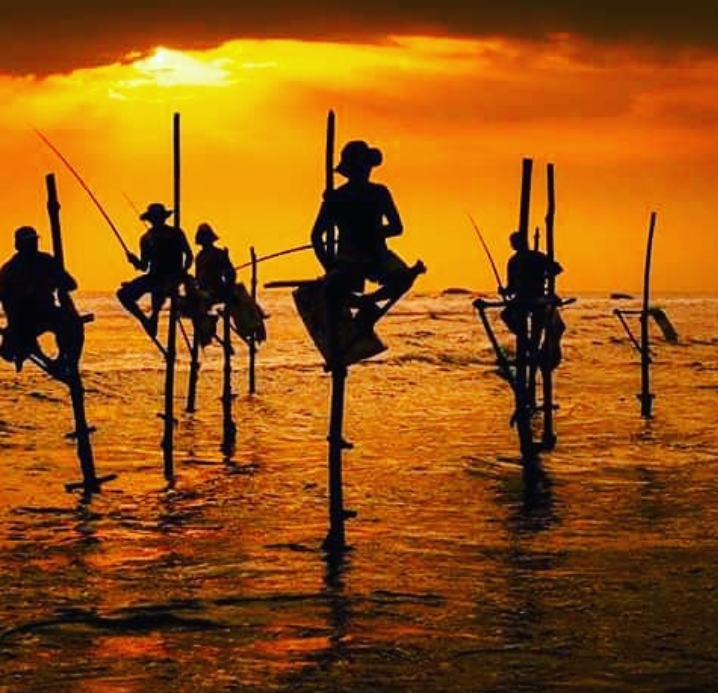
Along the palm-fringed southern coastline between Koggala, Ahangama, and Weligama, travelers encounter one of the most striking visual emblems of Sri Lanka: solitary fishermen perched gracefully on slender wooden poles planted directly in the churning surf.
Known in Sinhala as Ritipanna, this traditional method of stilt fishing is unique to this specific stretch of southern coastline.
1. The Origins and Technique of Ritipanna
Stilt fishing is a relatively young artisanal tradition, developing during World War II when food shortages and overcrowded coastal reefs forced local fishermen to innovate.
Rather than disturbing the fish by wading through the shallow reefs or casting heavy nets, fishermen wedged a vertical wooden pole (pettha) into crevices in the coral reef. A horizontal crossbar (kitiya) is lashed to the pole using coir rope, allowing the fisherman to sit balanced several feet above the breaking waves:
- Patience and Silence: The fisherman holds a slender bamboo rod baited with small shrimp or tiny lures. By casting no shadow onto the water and creating zero vibrations, schools of spotted herrings (koraburuwa) and mackerel swim directly beneath the perch.
- Woven Waist Bags: Caught fish are tucked into small cloth bags tied around the waist or lashed to the pole, leaving hands free to re-bait hooks.
2. Navigating Modern Realities & Photography Ethics
The 2004 Indian Ocean Tsunami caused catastrophic damage to the southern coral reefs, disrupting fish breeding habitats. Concurrently, younger generations have increasingly sought modern employment in tourism and commerce.
Today, while some elderly fishermen still fish for their families' livelihood at the crack of dawn (5:30 AM – 7:00 AM), many stilt poles along the main coastal highway are maintained primarily for tourist photography:
- If you stop to take photographs of fishermen posing on stilts, it is customary and fair to offer a small gratuity (typically 500 to 1,000 LKR per photographer).
- If you wish to observe authentic subsistence fishermen at work, ask your Pio Lanka driver to take you along the quieter backwaters of Ahangama at dawn.
“Seeing the silhouette of stilt fishermen against the burning orange sky at sunset is pure poetry. Be respectful, greet them with 'Aayubowan', and compensate them fairly for their time. They are keeping a historic visual tradition of our coast alive.”