Founded in the 4th century BCE, Anuradhapura is not merely an open-air archaeological park; it is a throbbing, living center of Buddhist pilgrimage. For more than 1,300 years, this sprawling city served as the golden capital of the Sinhalese kingdom, home to towering brick monuments that rivaled the pyramids of Giza in engineering complexity.
Today, thousands of white-clad devotees travel from across Sri Lanka to offer flowers, chant sutras, and walk the sacred circuits of the Atamasthana (the Eight Sacred Places).
1. Jaya Sri Maha Bodhi: The Living Relic
At the spiritual heart of Anuradhapura stands the Jaya Sri Maha Bodhi. Planted in 288 BCE from a southern branch of the original Bodhi tree in Bodh Gaya, India—under which Siddhartha Gautama attained enlightenment—it is the oldest living human-planted tree with an unbroken historical record in the world.
Supported by gilded bronze crutches, the sacred fig tree is protected on a raised terrace surrounded by gilded railings and colorful Buddhist flags. The air here hangs thick with the fragrance of burning camphor, coconut oil lamps, and piles of fresh purple water lilies.
2. The Colossal Dagobas
Anuradhapura’s architectural skyline is defined by colossal dome-shaped stupas (dagobas):
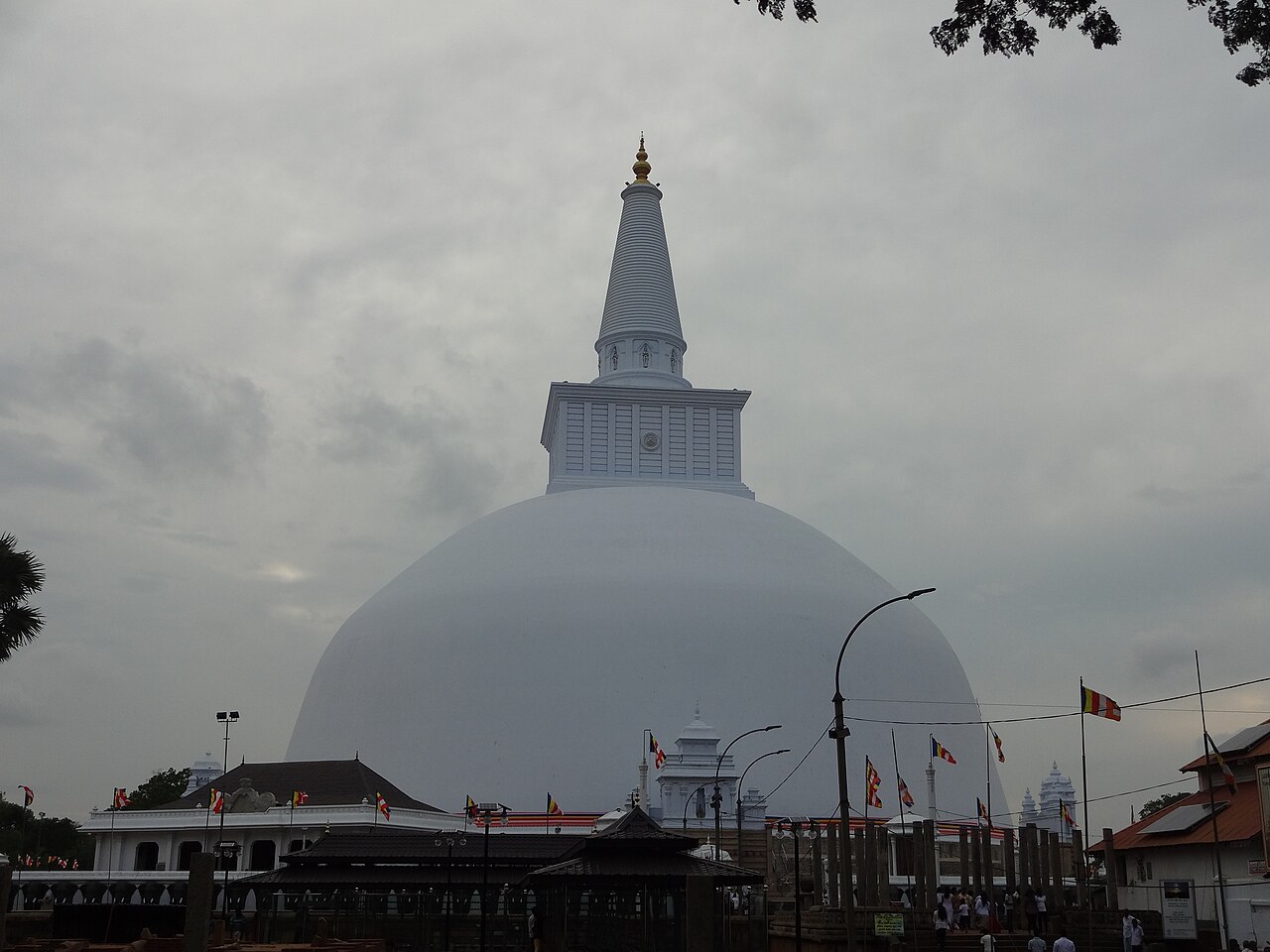
- Ruwanwelisaya (The Great Stupa): Built by the legendary hero King Dutugemunu in 140 BCE. Its dazzling white lime-washed dome rises 103 meters, surrounded by a perimeter wall sculpted with 344 life-sized elephant forequarters standing shoulder to shoulder.
- Jetavanaramaya: When constructed in the 3rd century CE by King Mahasena, it was the third tallest structure in the ancient world, surpassed only by the Great Pyramids of Khufu and Khafre. An estimated 93 million baked clay bricks were used in its construction.
- Abhayagiri Dagoba: The hub of a progressive monastic university that once housed over 5,000 international Buddhist scholars and monks, visited by Chinese monk Faxian in the 5th century.
3. Etiquette for Visitors
- Wear White or Light Colors: White clothing is the universal sign of purity and respect at Buddhist sacred sites. Avoid dark or revealing outfits.
- Barefoot Pilgrimage: Shoes must be left at the boundary shoe-keepers' counters. Because the sand and brick terraces become hot by 10:30 AM, visit either between 6:30 AM and 9:30 AM or in the late afternoon from 4:00 PM to 6:30 PM.
- Circumambulation: When walking around stupas, always proceed in a clockwise direction (keeping the sacred monument on your right shoulder).
“The most magical time in Anuradhapura is during an evening poya (full moon). As twilight settles, thousands of small clay oil lamps are lit around Ruwanwelisaya, casting a flickering golden glow against the white stupa while the sound of monastic drumming echoes through the trees.”