After the fall of Anuradhapura in the late 10th century, the royal capital of Sri Lanka moved east to Polonnaruwa. For two centuries, kings like Vijayabahu I and Parakramabahu the Great created a magnificent garden city of soaring brick stupas, intricate irrigation reservoirs, and masterfully sculpted granite temples.
Today, the sprawling archaeological park is shaded by towering banyan trees and smooth gravel tracks—making cycling the most rewarding and immersive way to experience the ruins.
1. Why Cycling is the Best Option
The ancient city stretches over several square kilometers. Walking in the tropical heat can be exhausting, while driving between sites in an air-conditioned car creates a disconnect from the landscape.
Renting a classic single-speed road bicycle at the museum entrance allows you to glide effortlessly along tree-lined paths, feeling the breeze off the vast Parakrama Samudra (the inland sea built by King Parakramabahu) and pausing whenever troops of toque macaques scamper across the road.
2. Key Archaeological Highlights
- The Royal Palace of Parakramabahu: The remains of a once seven-story brick palace that featured 1,000 chambers, supported by colossal three-meter-thick foundation walls.
- The Quadrangle (Dalada Maluwa): The most sacred terrace in the ancient city, containing the Vatadage—a circular relic house with four graceful stone Buddha statues facing the cardinal directions, protected by carved moonstones and guardstones.
- Rankoth Vehera: A colossal golden-brown brick stupa rising 55 meters into the sky, modeled on the ancient dagobas of Anuradhapura.
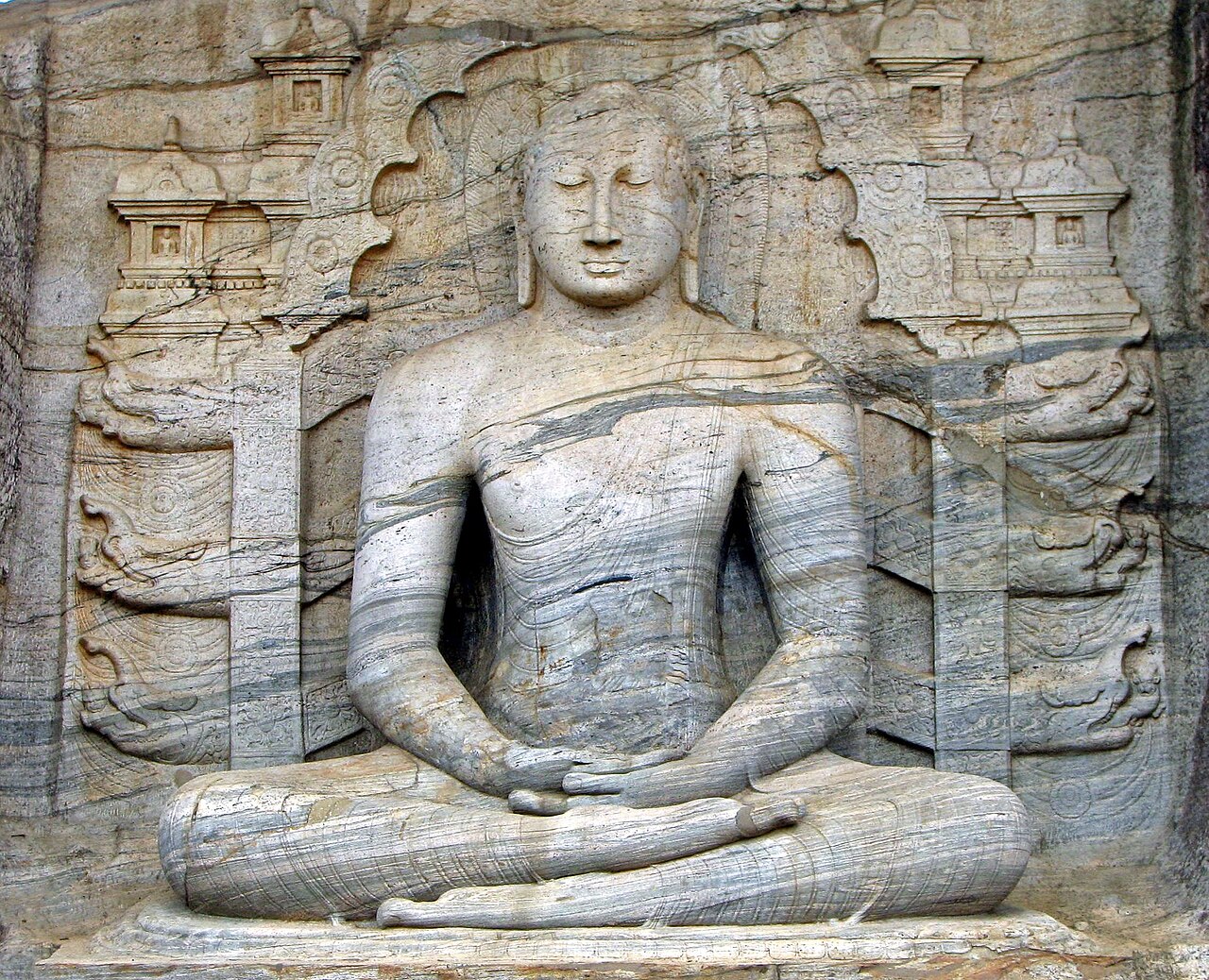
- Gal Vihara (The Rock Temple): The pinnacle of ancient Sinhalese granite sculpture. Four colossal images of the Buddha—one seated in meditation, one standing with arms crossed in compassion, and a serene 14-meter reclining Buddha—carved from a single continuous seam of gray granite.
3. Practical Tips for Cyclists
- Start Early: Collect your bikes between 7:30 AM and 8:00 AM. This gives you three hours of comfortable riding before the midday sun peaks.
- Temple Dress Code: While cycling in light, breathable clothes is fine, you must remove hats, shoes, and sunglasses, and cover shoulders and knees whenever entering sacred terraces like the Vatadage and Gal Vihara.
- Hydration: Carry plenty of bottled water. Local vendors near the major monuments also sell fresh chilled king coconuts (thambili).
“At Gal Vihara, take a seat on the stone bench across from the reclining Buddha and study the carving of the pillow. Notice the subtle depression where the Buddha's cheek rests, and how the toes of his feet are slightly offset, indicating the supreme peace of Parinirvana. The craftsmanship is humbling.”