Twelve kilometers east of Anuradhapura rises the wooded peak of Mihintale. Revered as the spiritual birthplace of Buddhism in Sri Lanka, it was upon this granite mountain summit in 247 BCE that Arhat Mahinda—son of the great Indian Emperor Ashoka—met King Devanampiyatissa of Anuradhapura and introduced the teachings of the Buddha to the island.
Less frequented by large tour groups than Sigiriya, Mihintale is one of the most serene, spiritually charged historical complexes in Asia.
1. The Grand Staircase of 1,840 Steps
Reaching the summit is a gentle pilgrimage. Rather than a steep, claustrophobic climb, the ascent is divided into three grand flights comprising 1,840 wide, shallow stone steps carved directly from the hillside.
The stairs are framed by fragrant white-and-yellow frangipani (araliya) trees that scatter delicate blossoms across the steps. The climb is shaded by teak and hardwood canopy, with cheeky troops of grey langurs watching climbers from overhead branches.
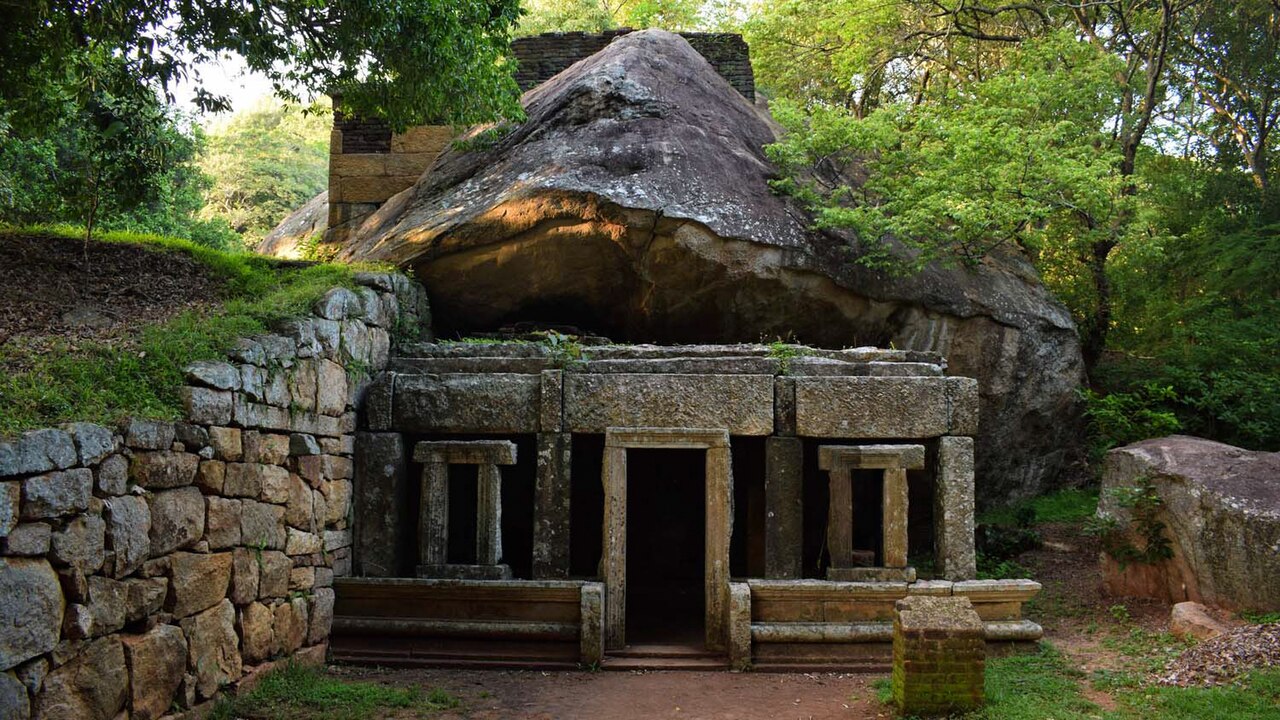
2. Key Monuments of the Mountain Complex
As you ascend through the terrace levels, several historic ruins emerge:
- The Ancient Hospital: At the base of the mountain lie the ruins of a 2nd-century BCE monastic hospital, complete with an intact granite medicinal immersion bath (beheth oruwa) shaped like a human body where patients were submerged in herbal oils.
- The Refectory & Inscription Slabs: Halfway up sits the monks' dining hall with a massive stone "rice boat" (bath oruwa) that once held communal meals, alongside two large stone tablets detailing ancient monastic rules and wages.
- The Ambasthala Dagoba: Marking the exact spot where the historic conversation between Mahinda and King Devanampiyatissa took place.
- Aradhana Gala (The Rock of Convocation): A sheer, wind-swept granite rock peak. Climbing the iron handrail to the summit rewards you with breathtaking 360-degree views across the dry plains and distant reservoirs of Anuradhapura.
- Maha Seya: The grand white stupa perched on the highest crest, containing sacred relics of Arhat Mahinda.
3. Practical Visitor Tips
- Timing: Visit in the late afternoon (around 3:30 PM to 6:00 PM). The stone stairs cool down, and the sunset from Aradhana Gala is spectacular.
- Dress Respectfully: Like all sacred Buddhist sites in Sri Lanka, knees and shoulders must be covered. You will remove your shoes before ascending past the middle terrace.
- Poson Poya Festival: If you travel in June, Mihintale becomes the focal point of the national Poson Poya festival, when tens of thousands of pilgrims light colorful lanterns and process up the sacred mountain.
“While everyone talks about Sigiriya, Mihintale is where you feel the peaceful heartbeat of Sri Lanka. Standing on top of Aradhana Gala as the evening breeze picks up and temple bells chime across the jungle is an experience that stays with you forever.”