Just east of the colonial Fort district lies Pettah (derived from the Tamil Pettai, meaning "the suburb outside the fort"). For over three centuries, this hyper-energetic, grid-like commercial quarter has been the bustling wholesale and retail trading hub of Sri Lanka.
Stepping into Pettah is an exhilarating assault on the senses: handcarts piled high with tropical fruit, the clang of brass scales, the shouting of wholesale auctioneers, and the rich scents of dried cinnamon, roasted chili, and jasmine garlands.
1. Navigating Pettah Cross Street by Cross Street
Pettah’s streets are organized traditionally by specialized trade:
- Sea Street (Chetty Street): The historic quarter of South Indian Tamil Chetty goldsmiths and jewelers. The street is lined with dozens of glittering gold ateliers and punctuated by towering Dravidian Hindu kovils adorned with colorful sculptures of deities.
- 1st & 2nd Cross Streets: The epicenter of vibrant textiles, saris, electronics, and tailor shops.
- 5th Cross Street: The aromatic center for bulk spices—mounds of whole dried red chilies, turmeric roots, cardamom pods, black peppercorns, and sacks of fragrant basmati and samba rice.
- Main Street: Household goods, footwear, leather wares, and luggage stores.
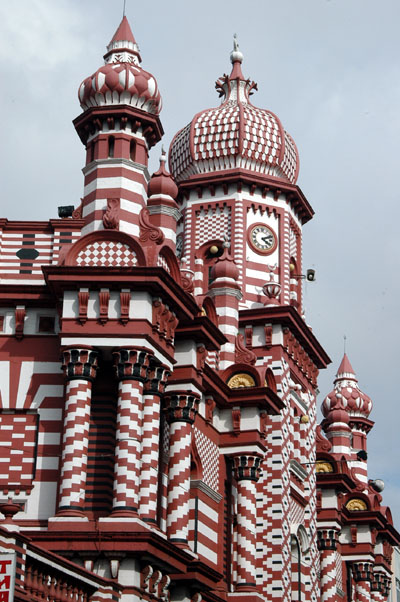
2. Jami Ul-Alfar Mosque (The Red Mosque)
Located on Second Cross Street, the Jami Ul-Alfar Mosque is one of Colombo’s most breathtaking architectural landmarks:
- Constructed in 1908 in the Indo-Saracenic Revival style, its red-and-white patterned brickwork resembles a giant candy-striped palace.
- In the early 20th century, approaching sailors used its striking minarets as a navigation landmark to guide merchant ships into Colombo harbor.
- Respectful visitors of all faiths may tour the outer courtyards outside of prayer hours (modest attire required; women must cover their hair).
3. Practical Tips for Visitors
- Stay Hydrated: The narrow streets trap heat; pause at roadside stalls for a chilled fresh king coconut.
- Watch Your Step: Handcart pullers (natamis) hauling enormous loads have right-of-way; listen for their loud calls of "Oram, oram!" ("Make way!").
“Pettah shows you the real, industrious heartbeat of Sri Lanka. We accompany our guests through the spice markets, introducing them to local merchants where you can purchase the freshest black pepper and whole cinnamon quills at true wholesale prices.”
Lakshman