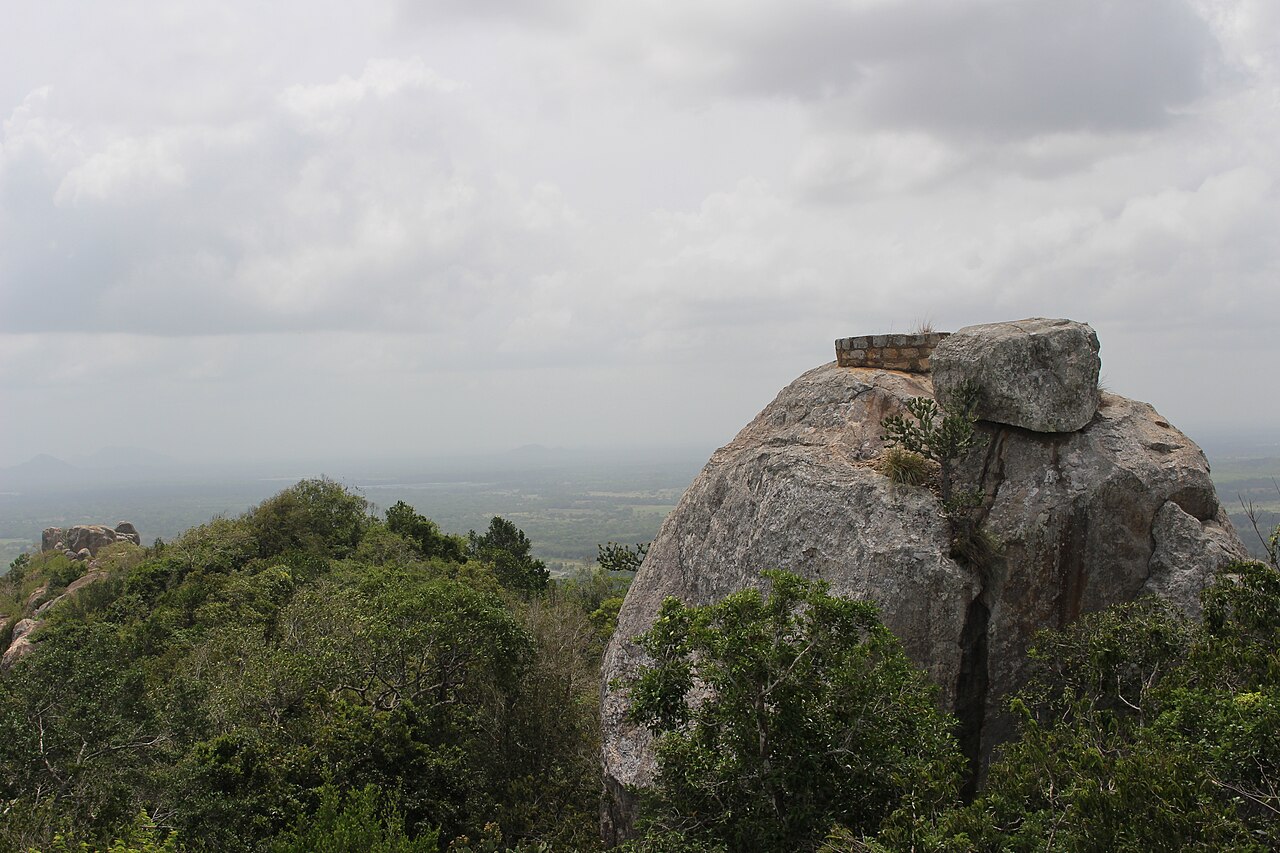
Rising abruptly from the flat agricultural plains between Anuradhapura and Polonnaruwa, the granite mass of Ritigala is both an ecological anomaly and an archaeological enigma. Reaching an elevation of 766 meters, this isolated mountain traps moisture from passing monsoon clouds, creating a unique temperate cloud-forest oasis in the heart of the dry zone.
Hidden beneath its towering banyan and ironwood canopy lie the atmospheric stone ruins of a 9th-century forest monastery, once home to the Pansakulika—an ascetic Buddhist brotherhood who renounced all worldly comfort to meditate in remote mountain solitude.
1. The Austere Elegance of the Pansakulika Monks
Unlike the grand royal stupas of Anuradhapura that feature elaborate carvings and gilded statues, the architecture of Ritigala reflects rigorous spiritual simplicity. The monks took vows to wear only robes pieced together from discarded shrouds and refused to decorate their dwellings with images of deities or kings.
- The Polished Stone Paved Way: A majestic walkway of massive granite flagstones stepping gracefully up the forested mountainside, crossing streams via monumental megalithic stone slab bridges.
- Double Platforms: Characteristic paired stone pavilions connected by a single stone bridge. One platform was open to the forest canopy for meditation; the other was roofed for resting and protection against mountain storms.
- Sunken Ayurvedic Baths: Intricate granite baths and grinding stones where natural medicinal herbs—many of which grow exclusively on Ritigala's microclimate ridges—were prepared for healing treatments.
2. Myths and Legends: The Monkey God Hanuman
In Hindu mythology, Ritigala is famously tied to the epic Ramayana. When Lakshmana, brother of Prince Rama, was fatally wounded in the war against King Ravana, the monkey deity Hanuman was dispatched to the Himalayas to gather sacred medicinal herbs (Sanjeevani). Unable to identify the exact herb, Hanuman tore away an entire chunk of the mountain and dropped a fragment in Sri Lanka—which legend claims became the herb-rich peak of Ritigala.
3. Practical Tips for Exploring Ritigala
- Atmosphere: Because Ritigala is an active Strict Nature Reserve, the archaeological zone permits quiet foot exploration along marked paths. Shouted conversations and loud music are strictly forbidden.
- Footwear & Mosquitoes: Wear sturdy trainers with good grip; the ancient granite steps can be slick with damp moss. Bring natural insect repellent.
- Physical Demand: A moderate 1.5-hour uphill walk with shade throughout. Not wheelchair accessible.
“While coach tours bypass Ritigala for Sigiriya, our independent guests often name Ritigala as their most magical morning in Sri Lanka. It feels like stepping into an Indiana Jones film set—stone ruins tangled in giant strangler figs with only the call of the hornbill breaking the silence.”